Sunday, May 22, 2011

We have new babies!!

No, not in our house, but on the golf course. Let me explain myself.

I was curious as to why a pair of Canada Geese (Branta canadensis) had not left with the rest of the flock. I watched and last week saw three babies accompanying the parents around a pond on the golf course. Ahhh, mystery solved.

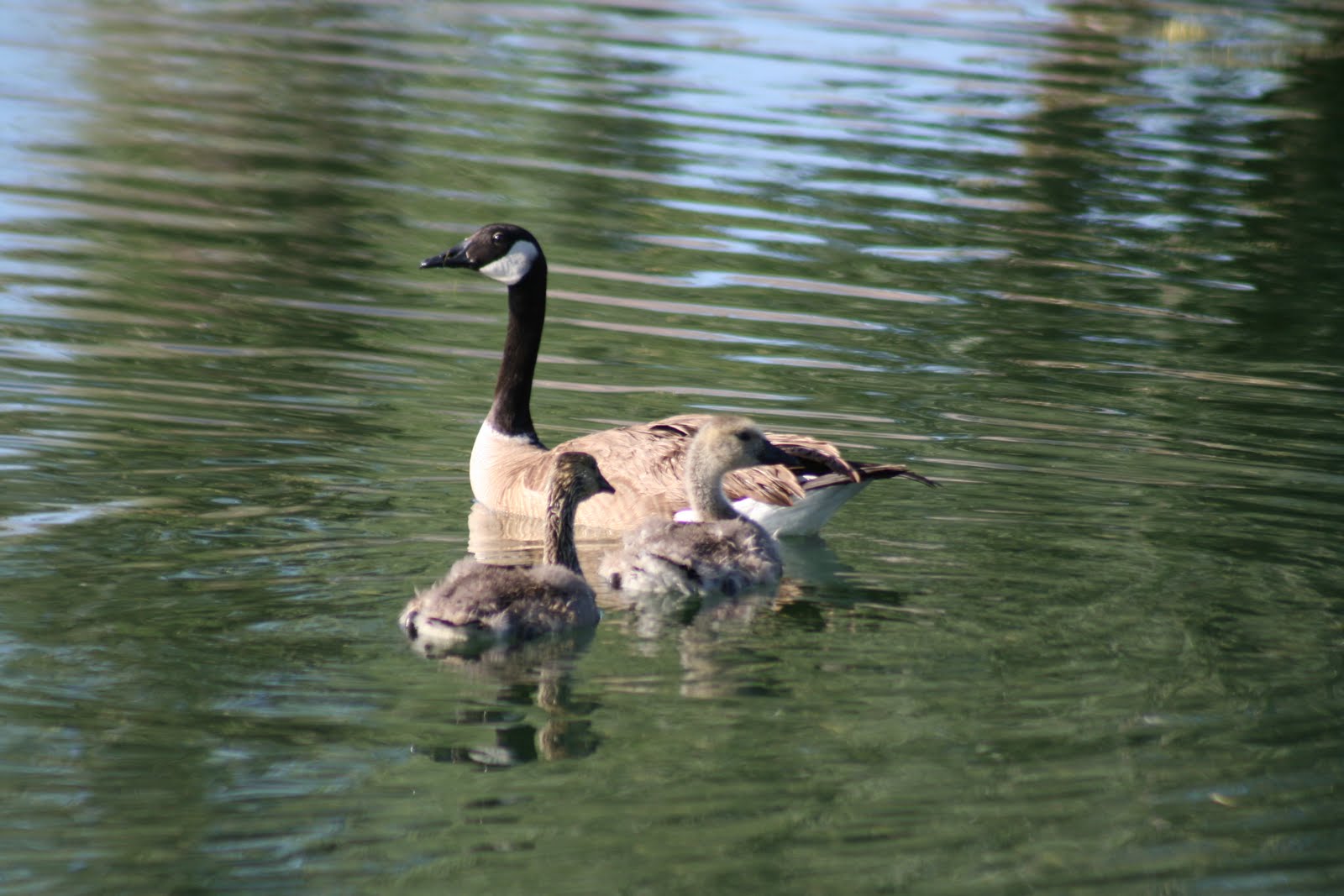
Then, today, I saw two separate families of Canada Geese, one with three new goslings, and one with two. Now the babies are about half the size of their parents and following them around. It was fun to watch the little ones mimicking their parents. When the adults dipped their bills into the pond, so would the babies. I will keep an eye on the new arrivals and keep track of their progress.


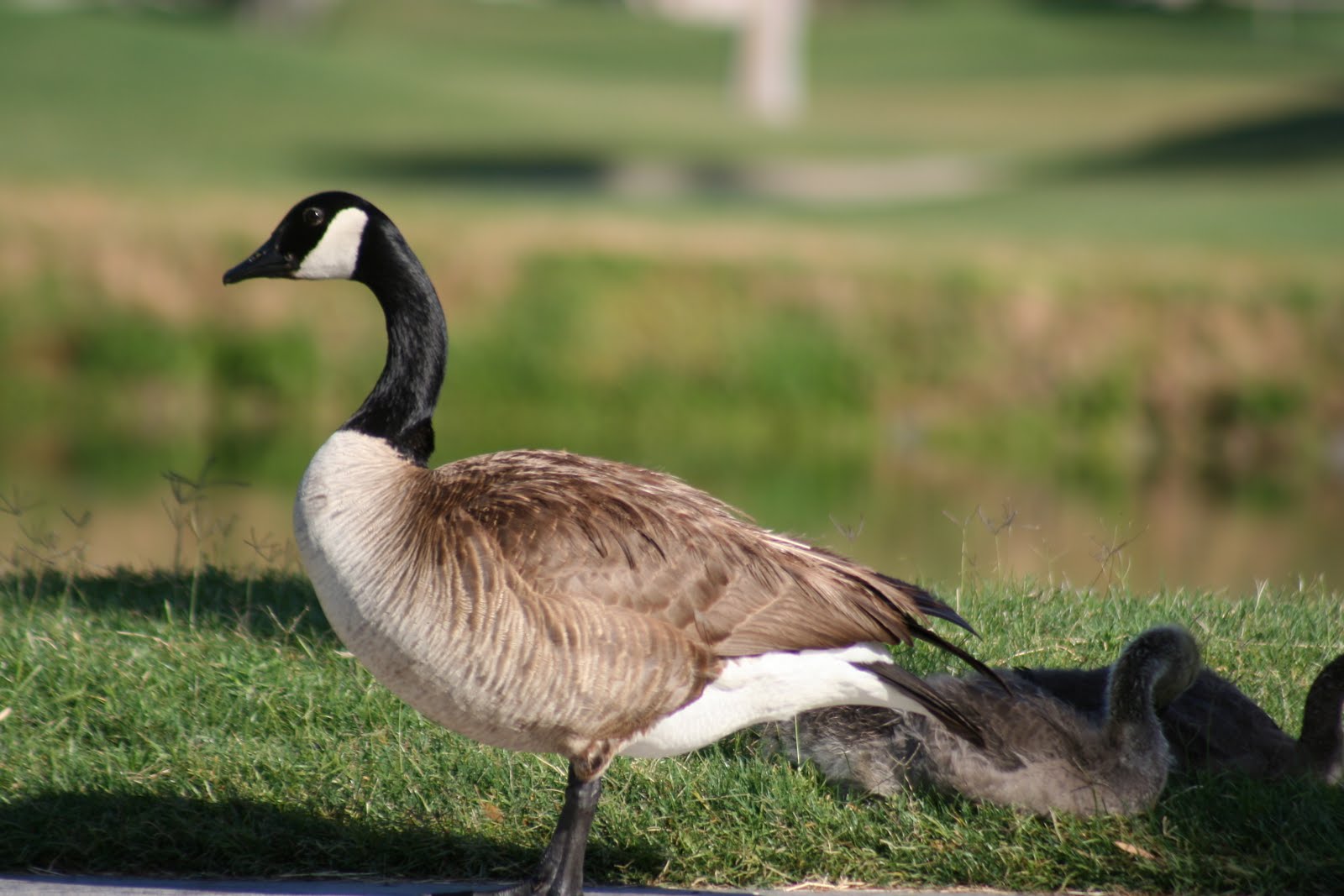
I also noticed something while taking the family photos. One of the adults, the female I think, has a narrow white ring around the base of the neck and was somewhat smaller than the other. I thought it was an Aleutian, but the bill seems too long and the ring on my bird was too narrow according the picture in Sibley's guide. I thought it might possibly be a Cackling Goose, but the head was not round and the bill too long on my bird, although the neck ring is narrow and more subtle on the Sibley guide picture like my bird. I am wondering if it is just a variation of the more Common Canada Goose, with a necklace, or a hybrid Aleutian and Common subspecies? I am open to any suggestions, please email me at philparker02@gmail.com.

Note the subtle ring around the base of the neck of this bird. It is hard to show here, but this is somewhat smaller than its' partner.

This is the partner and clearly a Common Canada Goose, (Branta canadensis), for comparison.


While following and watching the geese, I saw a family of Mallards, (Anas platryhnchos), swimming in the pond. It was great watching the little squadron moving in a controlled manner around the edge of the pond.


I also saw what I believe to be a Spotted Sandpiper, (Actitis macularia) working its way around the edge of the pond. This one had the particular bobbing behavior I read about. This means the bird probed the mud along the waters edge, then looked like it was going to sit down, then changed it's mind and stood up, then sit, then stand, bobbing up and down three or four times. It would then walk along probing the mud, then bob up and down three or four times again.


I saw this bird while photographing the geese, and when I walked toward it saw it disappear on the near bank of the pond. I walked to where I saw it vanish, and couldn't find it. Then, within a foot of my, well...foot, the bird flushed and flew to the far bank and went about it's business as if nothing had happened.

I saw a couple other birds while wandering around the golf course, one was an American Widgeon, (Anas americana), sitting with a pair of Mallards. I don't know why this one did not leave with the flock of several hundred that come each year and leave in April sometime. Any ideas?


Also, skimming the top of the pond for bugs was a Kingbird, (Tyrannus verticals).


You might be a birdnerd if...you spend a beautiful Sunday morning walking the golf course taking family photos of the birds who have taken residence there.

Saturday, May 7, 2011

Last Birdwalk at CV Wildbird Center for the year

Awww! Today was the last birdwalk of the season for the Coachella Valley Wildbird Center. Sandy Swan led the group, fighting through a case of laryngitis to do so. Elizabeth and her fiance helped spot birds, calling out from time to time. He was amazing at spotting birds without using binoculars. Well done, sir!

It was an amiable group of about 13 people who braved the rising temperatures to wander around the wetlands searching for birds. Or perhaps in order to earn the cinnamon rolls Linda York was baking back at the main house. Either way, it was fun.

We started out on the ponds, but today the only thing we saw on the closest pond was a "No Swimming" sign. It was a good thing there was this warning, too, as it would have been very difficult to swim there safely. At one point a Canada Goose with two adopted goslings walked across this pond to sit lazily in the shade behind the main house.


We walked, talked, and called out birds we saw as we chattered away walking from the ponds, to the large Cottonwood trees at the east end of the property. We then wandered along the fence toward the ponds and had a Killdeer, (Charadrius vociferus), very upset at us for getting too close to her nest. The vociferus portion of this bird's name is very apt. During our walk there were several Killdeer being very vociferous. We never found a nest, but the birds made every effort to gain our attention and take it away from the nest. They called loudly, ran in front of us, flew in circles close by trying to draw us into a chase away from the area. The only thing we didn't see was the injured wing act, in which the Killdeer drops one wing down and drags it as it limps away in order to make the predator believe it is injured and vulnerable, only to fly away when the attacker tries for the easy meal. As Sandy said, we walked past in order to keep the Killdeer from getting a heart attack they were so alarmed.

We saw a small flock of Yellowheaded Blackbirds that disappeared before I could get a picture. At the ponds we saw male and female Cinnamon Teal, (Anas cyanopthera), Redhead, (Aythya americana) as well as Shovelers and Mallards, Coots and Moorhens.

Sandy was able to help some of us tell the difference between the Canvasback (Aythya valisineria) and the Redhead. The Redhead, which we had at the ponds, has the blue bill with the black tip and the darker gray body. The body is gray as the Canvasback, but the Redhead is a little darker, which is a good secondary feature to look for, but the bill color is a clincher as the Canvasback is black.

(A Redhead between two Eared Grebes)

Don, one of the leaders of the birdwalks at The Living Desert, called out Eared Grebes(Podiceps nigricollis) on the first pond, but no one else saw them. They turned out to be on the second and third ponds, in full breeding plumage. Someone called him the Nostradamus of birdwatchers, seeing birds in the future.

(A pair of Eared Grebes that Don predicted would appear)

(A Ruddy Duck in full breeding plumage)

Later, Elizabeth found a Western Grebe, (Aechmorphorus occidentals), in the last pond we strolled around. This was after she retrieved a used Marsh Wren nest and proudly displayed it as she walked back to the group.

Speaking of Marsh Wrens, (Cistothorus palustris), there were many in the reeds around all of the ponds. One of the wrens was building a nest near the tower. I was able to get closer and got a couple pics of the little fellow industriously weaving his nest. It was fun to note that he used wet pieces of reed that had fallen into the water as material to weave together as a nest. I always marvel at their skill in nestbuilding, without the use of hands. I can't build furniture from IKEA with directions and a helpline, as well as hands and opposable thumbs, so using feet and a beak is amazing to me.


After wandering the ponds and seeing Caspian Terns, White-Faced Ibis flying overhead, a Red-Tail Hawk landing in a large Cottonwood tree near the entrance, we went back to the main house where the cinnamon rolls were ready. Coffee, cinnamon rolls and a couple bird guides were on the table as the count of the day was tallied. Linda's baby ducks, Burrowing Owl, Kestrel, and other patients were witness to the last day of the season. I am sure they were, like us, looking forward to October when the birdwalks will start up again.

(Elizabeth and Sandy on the left working on the count of the day)

You might be a birdnerd if... you hike for hours for cinnamon rolls.

Backyard surprises

Ok, so I am retired and hanging around the house a lot. I have had the opportunities to do a lot more birding than I have before, such as all the Christmas Bird Counts, outings at the Coachella Valley Wildbird Center, The Living Desert and more. It has been great.

So, while I am puttering around the house I noticed something different at the feeders. This is late April early May, so Spring is ending and all the snowbirds (both literally the migrating birds and the Canadians who come to the desert for winter), have fled to cooler climes. So this time of year we see several birds come through our yards, such as the Black-Headed Grosbeak, and Hooded Orioles. Every year I see a few Brown Headed Cowbirds show up at my feeders. This year I have seen flocks, sometimes fifteen to twenty at a time. Today, in amongst the Brown Headed Cowbirds, I saw something different.

I was sitting with Andi, my lovely wife of nearly 30 years, on our patio talking, when I jumped up and ran to the bedroom, (now, now, this is a family blog!) grabbed my camera and rushed back. There he was, a Bronzed Cowbird, (Molothrus avenues), was feeding at one of my feeders. As you can see from this photo, it is larger, and has a very red eye. It wasn't a life bird like I first thought, but it had been years since I had seen one. I apologized to my wife, but by this time she was very understanding.


The next day or so I walked by an open window at the front of my house and looked over at the golf course that we live across the street from, and saw something exciting. I again rushed for my camera, and out into the golf course I went in my flip-flops and dirty t-shirt.

I stalked my prey and was able to snap some photos of a mother and father Mallard duck,(Anas plantyrhinchus), and their duckling.


But my real prey was much bigger. Literally, two Canada Geese, (Branta canadensis), were herding their three goslings around the pond on the course. I was allowed some photos with promises of some wallet sized for their albums, and share them with you today.

Notice the size of the baby goose compared to the Widgeon, (Anas americana), that is full grown and really should have left for the north a couple weeks ago. Now he is the favorite uncle and helping out the proud parents.

You might be a birdnerd if... you lose all your manners and rush to see a new bird in the middle of a conversation. You might be married to a birdnerd if you understand completely, because it has happened so many times before.

Thursday, April 14, 2011

Birdwalk at Living Desert

This is the year for new things. Today I got to do something I did not even know we could do, at least until a couple weeks ago. The Living Desert, a local small zoo that specializes in desert flora and fauna, hosts a morning birdwalk on the third Thursday of each month. They don't hold the walks during the summer, June, July, August and September, as it is too hot for both birds and people. I got to go on this month's walk. Since I started volunteering there at the beginning of this month I have found out several fun things that are going on. The birdwalk was just one event the Living Desert holds, including the upcoming Brew at the Zoo event that features music, dancing, tours, and of course beer and wine. There are campouts called Starry Safari, tours of all kinds, dinner events, concerts and interpretive tours of the park for all ages.

I remember some of the events from when the kids were younger such as the Starry Safari, but that has been some time ago, and they have made many improvements to the park since then. If you haven't been in a while, it is worthwhile checking out.

I looked into volunteering at the Living Desert earlier in the year, but they only have so many training days for their volunteers and the last one for this season was in late March. I attended that and had my interview the following week. Judy Greene is the coordinator for the 500 or so volunteers at the Living Desert, and my interview was with her. At that interview, Ms. Greene told me she only had an opening at the Hummingbird and Butterfly exhibit and would that be ok. For a birdnerd? You kidding?!! Anyway, I told her that would be fine and started the following Saturday.

I walked inside the exhibit and it took my breath away. You have to go through a double door system to get in or out of the exhibit, which helps keep the creatures in while the people come and go. As I entered the second door butterflies of all sizes and colors were floating around a full garden of flowers, small trees, water fountains, and more. Hummingbirds zipped about inside the enclosure. As I walked around inside, there were several small nests, some with eggs, at least one with small birds beaks sticking out. In short, a heavenly place of solitude and life.

I have had a terrific time watching families come into the enclosure. While the kids try to get butterflies to climb onto their fingers and show off to anyone who will look their prizes, the parents marvel at the surroundings and numbers and colors of the floating butterflies. Everyone smiles. You can't help it.

Today though, we met with Judy Greene and Don Hay at the front gates to the zoo, where they introduced themselves and began the walk. They led the way through the park looking and listening to the birds that have come from the wild to visit or make their home in the park. (Don Hay is the guy in the blue shirt and he was our leader with Judy Greene)
(More of our group)

As we wandered around we saw Gambel's Quail, (Callipepla gambelii), Phainopepla, (Phainopepla intense), Lesser Goldfinch, (Carduelis psaltria), and Verdin, (Auriparus flaviceps). They were all busy foraging in the relative peace of the as yet unopened park, (at least to the public). The quail were moving through the large model train exhibit the park has. The model trains are all built and maintained by volunteers and each day there is something new in the elaborate recreations of old towns, mountainsides, lakes and streams they build. As the quail made its way through the small town with wooden buildings, it reminded me of Godzilla in those bad movies terrorizing "cities" in Japan. So I named this one the Godzilla quail, (Callipepla godzillii). We will see if it sticks and makes it to the textbooks. (Quail-zilla terrorizing the small town at the train exhibit)

The thrill of the day for me was by the Bighorn exhibit. There are some good sized Palo Verde trees there, and in those trees, (across from the Hummingbird/Butterfly exhibit), was a Nashville Warbler, (Vermivora ruficapilla). The Sibley guide describes the call as a metallic spink, and this is what we heard while he flitted busily in the thickest portions of the trees, always just out of clear sight. The guides say to look for a white eye-ring, and red on the blue-grey head. I didn't see either one of these markings, but did see the yellow body, grey head and greenish back and wings. I heard the spink as well. This was a lifer for me, so it was exciting and worth the walk. (This was the best shot of the Nashville Warbler)

As we wandered and looked inside the exhibits as well as the gardens between, a Double crested Cormorant, (Phalacrocorax azurites) flew almost directly over us. Later, a pair of Hooded Orioles, (Icterus cucullatus) flew over us as well. They were a male and female pair making their way back north in a leisurely fashion. (One of the "wild" Costa's Hummingbirds spending time at the zoo)
(A female Phainopepla feeding on these beans in one of the gardens between the exhibits)

As we walked we listened to coyotes howling from their pen, recordings of various birds and animals of the world, including the famous Kookaburra bird that makes it way to all the jungle movies from the early Tarzan to modern times. The funny thing is Kookaburra's are Australian and don't live in their jungles either. They are more like a Jay in that they will take your picnic lunch from you while you are still sitting at the table if you are not careful. Don shared some information I thought was interesting, many of the names we associate today with the various birds, Nuttall's woodpecker, Say's Phoebe, and more are names of military leaders that were amateur naturalists as well. He said many would collect samples of flora and fauna and send them to professional naturalists, like John James Audubon whose namesake is the famous society dedicated to saving birds. Mr. Audubon would then honor them by naming the creature after the first person that supplied him with a specimen that hadn't been identified before. Lewis' Woodpecker was "discovered" by Mr. Lewis from the Lewis and Clarke expedition. While many of the birds' names are a description of the bird or habitat it can be found in, like the Orchard Oriole or Spot-Breasted Oriole, many are named after the people who discovered them, and many of them, according to Don Hay, were high ranking military men of the time.

So all in all, it was a very satisfying two hours or so. I got to get into the park again, saw a life bird, saw some old friends in the bird world and got outside early in the morning, a good day.

I don't like posting on the blog without at least one decent picture, so there hasn't been a post for a while. But I have to tell a story to show I haven't been idle. I have gotten onto an email list that keeps me updated on all the birds that have been seen all over Riverside and San Bernardino counties. Many are at least an hours drive from my home. However, stories like seeing 20+ Swainson's Hawks in a tree during a heavy rainstorm, and several Bald Eagles huddled together during a heavy wind are fun to hear.

One story of an unusual bird caught my attention. Someone saw a Dusky Capped Flycatcher, (Myiarchus tuberculifer) in Demuth Park, Palm Springs. The thing that is exciting about this is I can walk to this park. So I did. I stopped by twice going to and from different appointments and looked carrying camera and bins past tennis players, kids playing, and lovers in the park. Didn't see it.

I go onto my patio to do something and hear a call I haven't heard before. I look up and see the Dusky Capped Flycatcher sitting on the wire that brings my cable t.v. to my house. I ran inside to grab my camera and by the time I came out it was gone. I don't know why I work so hard at birding, hiking and all, I should sit on my patio and let them come to me.

You might be a birdnerd if...you wander around a zoo looking at the "wild" birds that aren't in cages. And enjoyed it immensely.

Sunday, March 20, 2011

Something new

Well, I did something I have never done before on Friday, March 18th, 2011. A good friend of mine, Amy Scheir was visiting Palm Springs with her partner, Stephanie. Stephanie is a teacher who was in Palm Springs to attend a teaching conference, so Amy had to find something to do during the day while Stephanie learned more about teaching. So, I invited Amy along and I picked her up at the hotel at a little after 7 AM.

I met with Kurt Leushner and a group of mostly faculty from College of the Desert near the Agriculture building at C.O.D., and we left in a car-a-van for a wildflower expedition. Kurt passed out small radios to drivers of their respective cars and down the freeway we went. He called out flowers and birds as we sped along on the radios.

Kurt told us we were going to Joshua Tree, as far as the Visitors Center, then back around toward Mecca, looking for various wildflowers. He led the way with his lovely wife, and two other passengers in his car east bound on the 1-10 freeway. He stopped first at the rest stop past Indio, where we took a short break, and took a look at the ponds behind the rest stop. There were Yellow-rumped Warblers in the trees near the picnic tables, but nothing else truly exciting.

We mounted up and headed further east to our first official stop, the pumping station. Kurt said he liked it there because you pretty much have the place to yourself as no one stops there. Kurt stopped looking for a particular flower, the Ghost Flower, that is supposed to be pretty rare. According to Kurt, three out of four years we don't see these flowers. We were there for a few minutes and Kurt was showing us various flowers and shrubs when Bob, (who rode with Elizabeth, you remember her from leading the birdwalk at the Wildbird Center earlier in the month), called out he had found a Ghost Flower. Kurt confirmed the find and pointed it out it was exactly where it was supposed to be, at the edge of a wash in the sandy area before the rocky bank. This was where we found our first Beavertail Cactus in bloom as well. Kurt showed us how the stamen inside the flower closed up on whatever found its way inside the flower, so that they all shared their pollen with the visitor and not just the chance one the visitor happened to brush up against. I had never seen this in a plant other than carnivorous plants, and found it fascinating.

(Kurt showing us different plants)

(Kurt showing us how the stamen close up on visitors inside the Beavertail Cactus flower)

(Beavertail Cactus flower)

After the Pump Station, we went further east on the I-10 to the Cottonwood Canyon off-ramp toward the east entrance of Joshua Tree. As we turned onto the roadway and headed north into the National Park, (us old-timers still mistakenly call it the Monument), Kurt began to call out flowers he saw growing alongside the roadway until we found a pull out with a trailhead. We parked there and took the little loop where Kurt showed us Chuperosa, our first Monkey Flower, Purple Mat, as well as Bladder Pod and Chia. The interesting thing about the Chia, (no not the pet on t.v.), was that it grew up in a spiky ball that had small flowers that sprouted from the ball. The flowers bloom randomly and at different times in order to prolong their blooming season, all around this spiky ball, not all at once for a short time like some other plants.

(Chia flower)

(Ghost Flower that we didn't find was so rare this year)
We saw Yellow Cups, Yellow Poppy's, Arizona Lupine, Desert Chicory, Brown-eyed Primrose, Silver Cholla, Fiddleneck Desert Dandelion and Dune Sunflower, and more. Kurt was happy to find Fremont Pincushion and Wild Heliotrope or Phacelia as well. He walked us back away from the loop to show us the beautiful blue flowers of the Canterbury Bell that grew along the roadside in the gravel, right where they were supposed to be.

(Canterbury Bell flowers on roadside)

Even though this was supposed to be a so-so year, walking among the tall flowering Ocotillos, looking at all the flower cacti, and small flowers of bright yellow, purples, and blues covering the rocky and sandy soil was exciting and fun for me. I kept snapping photos. Several of the flowers like the Chia, Monkey Flowers, Purple Mat and others were what Kurt called "belly flowers" because to get a good look (or photo) they make you get down on your belly to see them. We also saw more Ghost Flowers here at the stop as well.

(Monkey Flower)

We then moved up to the road and pulled off in a small turnout parking lot. There we found Monkey Flower, Desert Filaree or Storksbill, Spanish Needles Dune Evening Primrose and more. I began walking down a wash area with Julie Bornstein, another attendee, while Kurt, Amy, and a couple others went over a small hill. I was walking and talking to Ms. Bornstein when I spied a Desert Tortoise propped on a rock. The rock was on a spine of sandstone that separated our two groups, one on one side of the hill and us on the other. I left Ms. Bornstein in mid-sentence and climbed the short distance to the tortoise calling for Kurt. My first wild Desert Tortoise, how exciting! I got up close and was looking for the best vantage point to take a good close up picture when I spied a small rattlesnake along the top of the spine of rock, just a couple feet from the tortoise. This was a small Speckled Rattlesnake who was fine until the rest of the group came to investigate, then he got a little nervous and worked his way down into a hole. The tortoise sat still the whole time and we left it alone, content to take pictures. Kurt's wife explained that trying to move or handle the wild tortoise could cause it to panic and expel its stored water, or hurt itself trying to escape. She explained it was best to leave it alone, but this was hard as the tortoise appeared to be in a kind of precarious position on the edge of a rock a foot or two up.

(It may look like I planted this Tortoise for the picture, but I swear this was what I saw while talking to poor Ms. Bornstein)

(The little rattlesnake near the tortoise as he decided it was better under the rocks)

The other dilemma we had was there was a much larger group coming behind us that was led by a Park Ranger. Kurt's wife caught the Ranger and told her about the finds, but the Ranger chose not to disclose this to the group in order to leave the animals in peace.

In all the years I have been hiking in the deserts, these were my first tortoise and rattlesnake to see in the wild. working in Palm Springs I found several rattlesnakes crossing roads, but never on my hikes in their "natural environment" like this one. This was worth the entire day for me. I wonder how many I tromped past in my hikes over the years, oblivious to their presence?

Of course, there were birds as well. We saw Loggerhead Shrikes, Phainopeplas,Black-chinned Sparrows, House finches, and Ravens.

We continued up into the Park to the Visitors Center where we had lunch and got to know each other better. After lunch we headed back down and out of the Park, across the freeway and onto Box Canyon Road toward Mecca.

I really enjoyed this drive as 1) it was new to me and I like the feeling of discovery; 2) the geology was very different, with the canyon we drove through changing from varicolored sandstone to sandy conglomerate of rocks that grew in straight walls on either side of the road. Sandy washes ran alongside the roadway, and every so often an open area would appear and trees or canyons would empty into these open areas and we would stop and fan out looking for new and different flowers and creatures.

It was in one of these wide areas with a couple large trees that we saw a Black-Tailed Gnatcatcher, Verdin, and Anna's Hummingbirds. There was also a pair of Phainopeplas that were battling with a Ladder-Backed Woodpecker for position in a lone tree that surprised me. Elizabeth blithely stated the Ladder-Back was exactly where you would expect to find it, but it was a surprise to me, I didn't expect it. They apparently like dry open areas, and being woodpeckers, like trees as well. This fit the bill, but I didn't expect it when we started up this canyon.

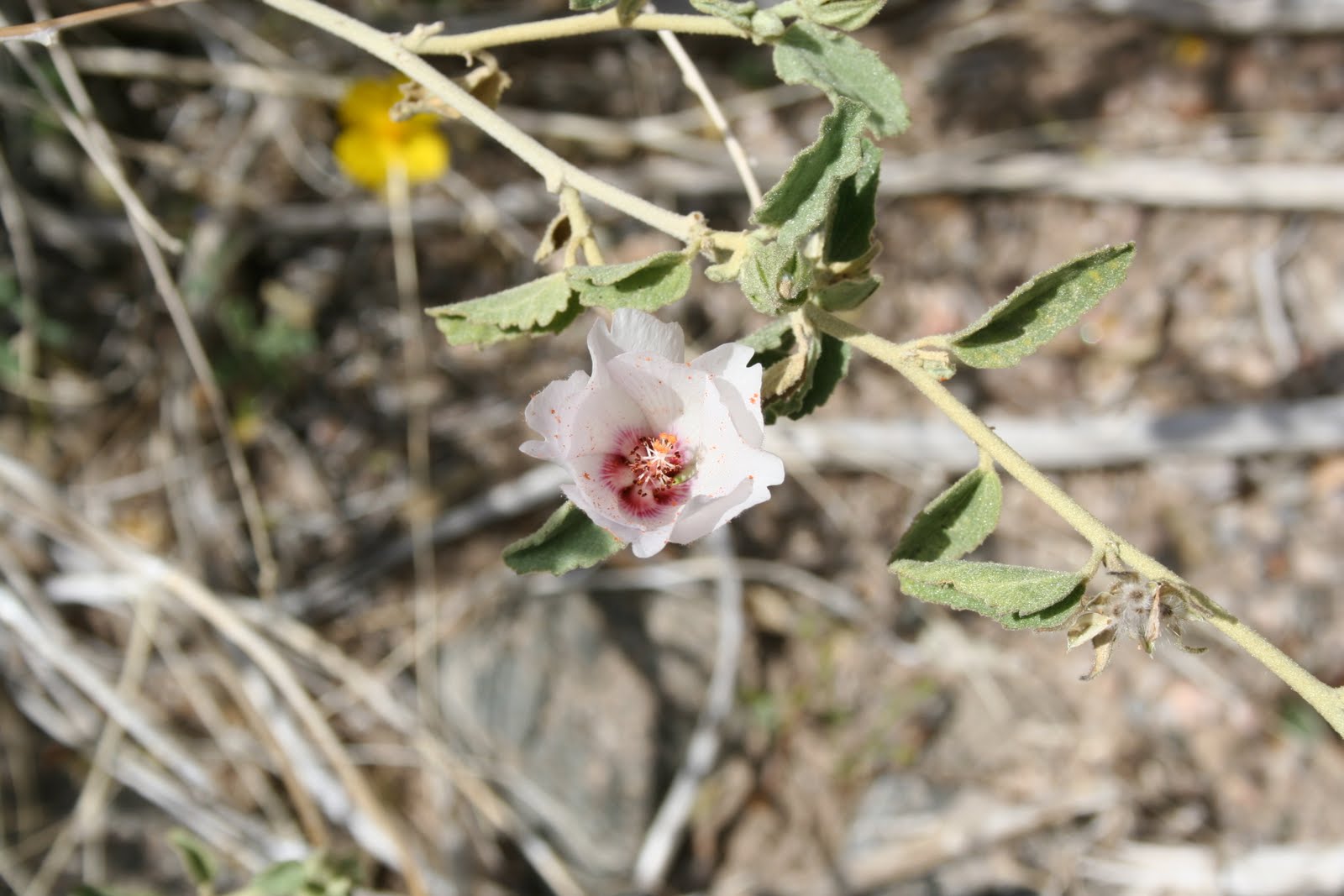
Kurt announced he was looking for a "holy grail" flower called the Five-Spot. While we hiked around Kurt found another rare plant, the Desert Hibiscus in a small canyon off the wash. One of the participants, a math teacher whose name escapes me now, brought Kurt his pocket camera to show him a flower he found and didn't recognize. Kurt's wife and I were following a small Desert Iguana when Kurt began to call us over to him. The math teacher had found the Five Spot flower and we all got a good look, as well as photos.

(Five Spot Flower)

(Desert Hibiscus)


After hiking around and finding all sorts of cool things, we drove through the canyon and found Highway 111 and drove to Coachella, where we stopped and had Date Shakes.

All in all a great day!! I got to see some things I have always wanted to see in the wild, some things I had no idea were out there, and spent the day with a good friend and some new friends. I learned stuff, and spent some time in the wild.

You might be a bird nerd if...You take any and all excuses to get out and see what's out there, even a wildflower outing!

Saturday, March 5, 2011

Coachella Valley Wildbird Center birdwalk

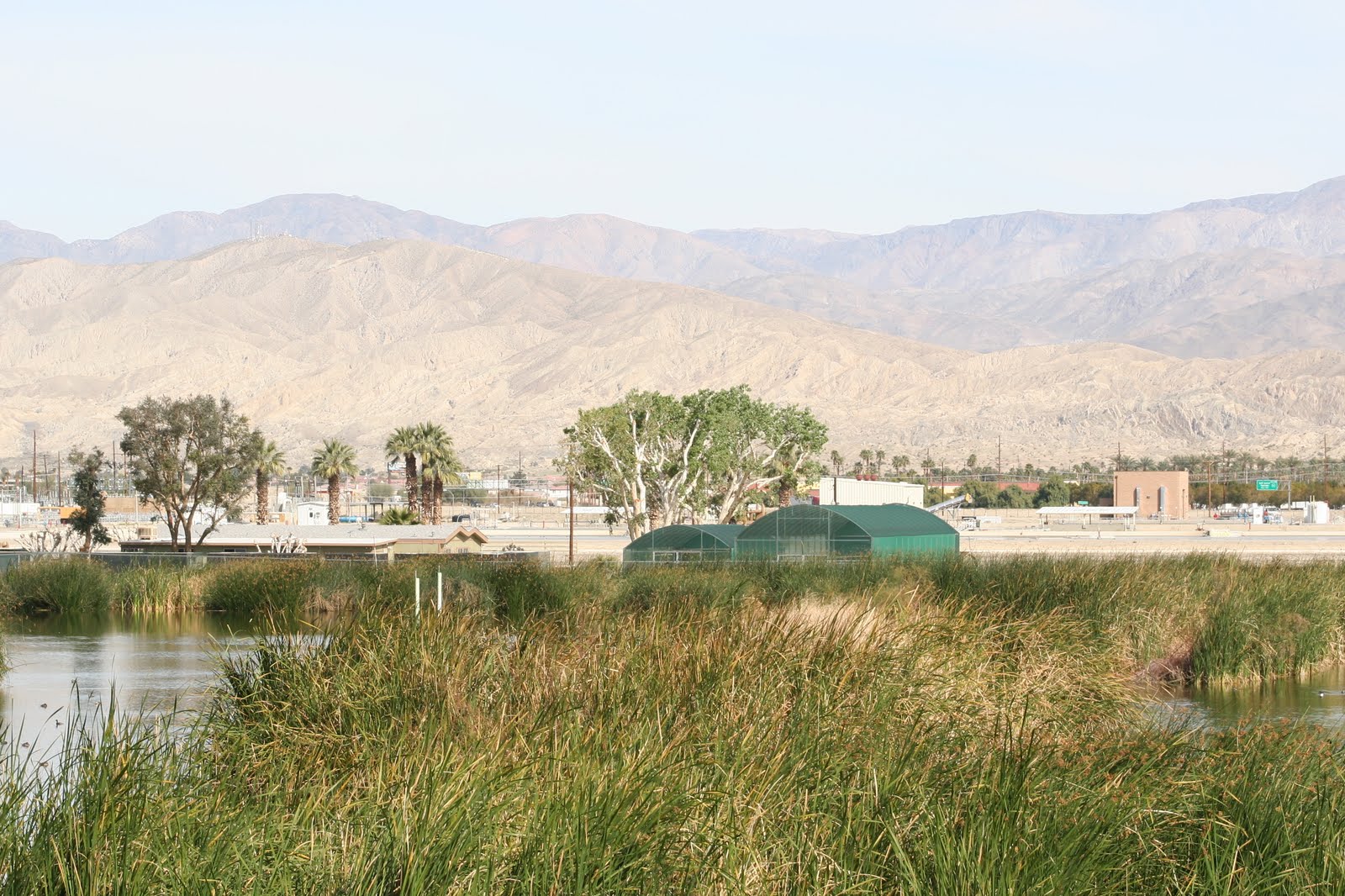
Every first Saturday of the month there is a bird walk held at the Coachella Valley Wildbird Center in Indio. This month's was 3/5/11, and yes, I said Indio. If you want to visit Linda York and her volunteers at the center on the first Saturday or any other day, just take the Golf Center offramp from the I-10, turn south, then take the first left at the bottom of the overpass. You then drive past several industrial buildings, past the water plant, and look for a small driveway that today had a dark blue flag next to it. Over the driveway is a large gate and sign identifying the place, made of telephone poles and reminded me of the gate at Jurassic Park. It feels as if you may have to know the secret password to get in, but you can drive in unmolested. Once inside and you step into the small house where the food prep, teaching and rehab of injured birds occurs, you are greeted warmly by friendly and busy volunteers.

The walks start at 8 a.m. and today there were several people from out of town that were eager to see the birds they rarely or never saw near 'home'. Birds like the Greater Roadrunner and Abert's Towhee that I see commonly, even in my backyard, were life birds for at least two people in the party.


We started on the berm in front of the small headquarters of the wildbird center. There, Elizabeth, our leader, found a Spotted Sandpiper two ponds over and only visible through the scope. I am not sure how she found it, (planting it always seems to be a viable choice in my mind), but there it was bobbing along the waters edge. On the water were many Shovelers, Ruddy Ducks, and Coots.


Soon, Elizabeth moved us along to a large Cottonwood tree in a large field that seemed to attract Abert's Towhee, Yellow-Rumped Warblers and Blue-gray Gnatcatchers, and Black Capped Gnatcatchers. These are small little birds that move quickly and deep in bushes, so hard to identify. Today the Blue-Gray Gnatcatcher came rather close and near the top of a bush to give at least two of us a good look and I was able to snap a couple shots.


We caught up to the group and soon we were serenaded by many Marsh Wrens and Coots. Marsh Wrens are usually pretty shy as well, calling loudly, but from deep in the reeds by ponds and waterways. Today several were seen flying from one set of reeds to another, calling from the tops of reeds and more. Coots are common, but Moorhens are less so. It was fun to see several pairs of Moorhens strolling around the reeds as well.

(Common Moorhen foraging along the water line)

(One of the many serenading Marsh Wrens on our walk. They are mostly shy and call from deep in the reeds, but sometimes they pop up and sing close enough to get a pic).

During our travels around the ponds we were treated to a Sora sneaking into the reeds, and walking along the waters edge, and later an American Bittern. I got to see a glimpse of the Bittern as it flew into an opening in the reeds and disappeared deep inside. Others had seen it for some time as it did what Bitterns do, stand very still like a reed, but I was able to see it only when it flew.


(Views from towers built in the wetland the York's have built, you can see the cages in the background the Boy Scouts helped put together).

We finished back at the house where we were treated to coffee and freshly baked cinnamon rolls while we tallied up the species we saw. We got a total of 46 species of birds today. I find that with birders, the number of species of birds is a little like the rest of us and money, we always want to see a little bit more.

Several of us have visited the Wildbird Center for a number of years and have watched it grow. For me, I became aware of Linda York and the Center when my boys were in the Boy Scouts, and an Eagle Scout project involved helping them put together several of the large cages they employ today. It was a good project and it has been fun to watch the different birds living in the cages over the years. We have watched the 'wetland' grow as well, fascinated by the management of the facility and how it has become an important location for wintering birds.

You might be a birdnerd if...you travel to Indio for a vacation because it is a central spot for wintering birds.

Sunday, February 20, 2011

Dipper trip at Tahquitz Creek


(The day after--a heavy storm the night before)
This morning I went to Tahquitz Canyon to try to find the Dipper, (Cinclus mexicanus). I had heard at least one was spending part of the winter in the canyon, working the creek. For those not familiar with Palm Springs and Tahquitz Canyon, now there is a Visitors Center there, and it costs $12 per person to hike the looping trails along the creek. This has only been the past seven or eight years, before that the canyon was open and you could wander in and out from a variety of entrances. It was also uncontrolled and homeless people lived in the canyon, using the resources as I imagine the native Agua Caliente Band of Cahuilla Indians did in history.

As you know, Palm Springs is in a desert. It is a terrific place on the leeward side of Mt. San Jacinto so all the weather normally hits the west side of the mountain, leaving the east side dry and protected from the wind. You really can sit in downtown Palm Springs, which is close to the mountain, very comfortably sipping a Starbuck's, then drive a couple minutes north and be in a blinding windstorm. Windy point is aptly named, as a hapless film crew found out years ago when they were trying to set up their equipment to take some shots of inbound Highway 111. The wind kept blowing their cameras down, even with sandbags on the tripods.

I am always impressed by being able to definitely point to a location where the mountain starts and the desert stops. From just a little ways away it appears as if Mt. San Jacinto just lifts vertically out of the ground on the west side of Palm Springs downtown area. As you get closer you realize there are many beautiful canyons that keep their secrets well from those less intrepid or curious. Tahquitz Canyon is one of the more well known of these canyons.

In days past, it was a popular destination for Spring Breaking college kids, who would hike up to the falls for swimming and frolicking. Now it is very controlled, complete with flood control and guided tours so the frolicking is less, but you can learn a lot more about the flora and fauna, as well as the native peoples lore. There is also a lot less graffiti and trash. The tribal rangers make sure the place is safe and pristine.

I have read on several emails sent out on a listserv that there has been a Dipper working the canyon along the creek for several weeks. I decided to try for a picture or two. I hiked up the creekside trail and kept my eyes peeled. I ended up going all the way to the falls before I knew it. We had a pretty good storm by desert standards over the past two days, so there was plenty of water in the creek, and the falls were gorgeous.

Along the way a California Towhee (Pipilo crissalis), came into the sun and perched on a rock sunning himself, allowing me to snap a couple shots. Hummingbirds were plentiful, zooming in and around hikers, scolding them as they zoomed past. The Chuperosa was just blooming all through the canyon and the hummers were busy at every flower. I believe there were Costa's (Calypte costae), and Anna's (Calypte anna) hummingbirds buzzing all through the canyon.


There were Ravens(Corvus corax) in a group of about 10 playing along the canyon walls. A Red-Tailed Hawk (Buteo jamaicensis), floated above the canyon for a time. As I made my way up the trail Mockingbirds (Mimus polyglots), and Verdin (Auriparus flaviceps) kept me company in and out of the bushes.

I walked all the way up to the falls, then back down, taking little forays off the trail to keep near the creek and scan for the illusive Dipper. I saw a Tribal Ranger taking a group on a guided tour and asked him where the Dipper was last seen. He told me it had been seen near the first crossing of the creek, near the mouth of the canyon, and the visitor center.

(This pair of Mallards were keeping to the foliage at the edge of a pool near the falls)

I made my way back and marveled at the amount of tourists that were hiking the trail. Many wore shirts, sweatshirts, hats and other paraphernalia announcing where they were from. Places like Wisconsin, (they were in shorts and t-shirts), Canada, Texas and more. People of all ages were making their way up and down the canyon. The hummingbirds didn't care. They scolded and zoomed about without care. The towhees spent most of their time on the ground under bushes keeping away from tromping feet. Sparrows and Mockingbirds made their way up the canyon walls one bush at a time away from trail-keeping humans.

(A small falls with the sunlight reflecting off the water)

I made it back to the first crossing and kept to the creek as I made my way slowly toward the Visitor Center. I scanned but didn't see anything resembling a Dipper. Dippers, or Ouzel's as they are known, are peculiar in that they are a small bird that like fast moving creeks. They flit to a rock in the middle of the swift water, then simply dive into the rush of water, disappearing to the bottom of the creek where they feed. Then they pop up on the surface of the water, bob to a rock and step out. Water beads up and is shaken off. They repeat the process, foraging along the creek bottom until sated. Amazing to watch. I saw one years ago in the Kern river and sat mesmerized as the little bird popped first under the water, then up and onto a smooth rock, seemingly unaffected by the swift current.

Today, I found myself standing about fifteen feet above the creek, near the Visitor Center with people streaming to and from the Center, up and down the canyon, believing there were too many people for the little Dipper to be out and about. Then I saw it. It flew right up the middle of the creek toward the crossing. I actually said out loud, "There it is!" and hustled my way through the hikers up the creek. I never got a picture or got to see the little guy do his thing, but I did verify it was there, and I will make another trip to get to see it again.

You might be a bird nerd if... you go up a popular canyon looking for a little dipper.